Being Reshaped Through Crisis

How is your family being reshaped by the pandemic? The pandemic has shaken apart what once seemed solid and left a mess of broken pieces. Schools and daycares have closed. Some work has migrated from the office to home. Jobs have ended. Lives have been lost.

Times of tremendous upheaval produce a rollercoaster of feelings. Hundreds of webinar participants were asked how they were feeling during this pandemic. The responses ranged from anxious, exhausted, numb, surviving to hopeful, adapting, learning, grateful.

How are you feeling right now? What’s going on when you feel your best? What are you doing when you feel your worst?

Paying Attention to Your Feelings

Feelings provide powerful information about what is going on within you. Your feelings follow your thoughts. When you are thinking about how much you love your children, you are likely to feel gratitude and appreciation. When you are focusing on the chores your kids haven’t done, you may feel anger and irritation.

(finish reading at PricelessParenting.com)


Being Calm Amid Uncertainty

How good are you at being calm during times of great uncertainty? For most of us it’s not easy. It’s hard to remain calm when you are faced with financial challenges, a scary health diagnosis or a global pandemic.

Your thoughts about the situation effect your feelings. When there’s uncertainty, your thoughts can project a terrifying, horrendous future. Dwelling on your scary thoughts is a recipe for feeling overwhelmed, not calm.

Noticing Your Thoughts

What are you saying to yourself? Are these thoughts helping you or making things worse? Noticing your repetitive thoughts is the first step in altering them.

Whatever you focus on expands. Do you know what you are spending your time dwelling on?

(finish reading the article on PricelessParenting.com)


Carving Out Time for the Most Important Things

Being a parent means your days are filled to overflowing with all the tasks that are required to keep your family running: making meals, doing dishes, driving kids to activities, washing clothes and working. These daily duties can leave you with little time for doing fun things with your kids.

It’s easy to say things like:

  • “I’ll play a game with the kids tomorrow.”
  • “We’ll go fishing together soon.”
  • “I’ll bake cookies with the kids next week.”

The things that are the most important are also often the ones that are the easiest to postpone. The problem is that sometimes the delay is so long that you miss the opportunity. Your children will not want to have a tea party or play catch with you forever. They quickly grow up. If you want to share special times with your children, you must intentionally carve out the time to do these things.

Remembering the Good Times

Parents attending a seminar were asked to think back to their own childhoods and remember someone who loved them. They were asked how that person showed their love.

(finish reading article on PricelessParenting.com)

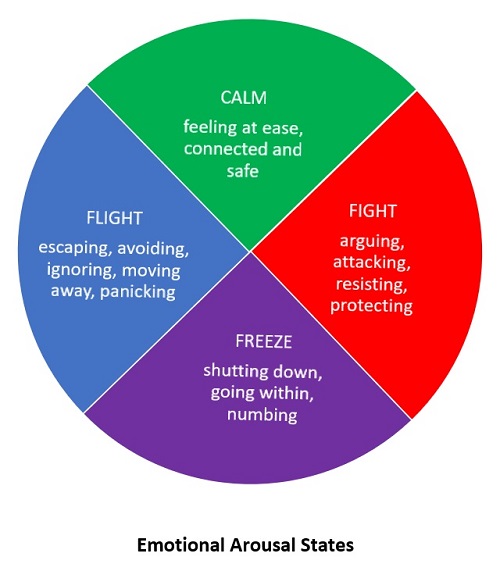
Responding Based on Emotional States

Recognizing emotional states is key to good communication. You need to know both your own emotional state and the emotional state of others. This would be a lot easier if people’s emotional states weren’t constantly changing!

Have you ever had a terrible morning because your child became upset over something? Perhaps your child felt rushed, couldn’t find the completed homework or didn’t want to go to school. Situations like these can spiral downwards quickly as tempers flare.

If you don’t recognize your child is not in a calm state, you can accidentally add more stress. It’s especially easy to ignore or misread your child’s emotions if you are not in a calm state yourself.

(finish reading this article on PricelessParenting.com)

Ready for easier parenting in 2020?

Parenting can be a pleasure or a pain.  If one of your goals in 2020 is making parenting less stressful and more fun, I hope you’ll join one of Priceless Parenting's classes (ages 0 – 5, 6 – 12 or 13 – 18). The classes now include monthly group coaching calls so you can get your specific questions answered.

Parents who’ve taken Priceless Parenting’s classes report positive changes in their families. Here are a few parent comments about the classes:

"I'm in awe of how well the course is assembled. It was far above my expectations and learned more than I ever realized I would as a parent of 5 kids and been parenting for many years. I never imagined a simple course like this could teach me how wrong my approach to parenting using discipline and anger or frustration has been. It has been a long time since I have laughed and cried at what I have done wrong or right as a parent. I realize a whole new world of positive parenting and guiding my children with options and empathy using patience and love for my children as well as myself." - John Bramlett, Enumclaw, WA

"This parenting class was extremely informative and interesting. I found it easy to understand, and I loved the real-life examples included. I'd recommend this course to anyone. It's truly been helpful to myself and my family!" - Amanda Mullins, Defiance, OH

"It is wonderfully made - very informative and educational. Definitely showed me where my weaknesses are and how to change them to invite a more positive response. The constant struggle caused frustration only to see both of us stressed and frustrated. I like the self-paced program for those of us who do not work a normal set work schedule. It fits in better than weekly in person meetings that are hard to make. Definitely worth the time and money to learn how to communicate and listen to your child while setting clear boundaries." - Brandon Krogh, Newman, CA

If you have any questions about the parenting classes, please email support or call 425-770-1629.

Expressing Love, Gratitude and Forgiveness

What four things matter the most in parenting? Might they be the same as the four things that matter most in life? It’s likely since your relationships with your children are among the most significant ones in your life.

The Four Things That Matter Most


Dr. Ira Byock, an international leader in palliative care, has witnessed many people’s final days. He’s captured the valuable things he’s learned from the dying in his book, The Four Things That Matter Most: A Book About Living.

Byock noticed many who are dying have a strong desire to repair relationship rifts with their loved ones. Repairing their relationships allows them to die in a more peaceful state. He learned that these four statements were the crucial ones to communicate:

(finish reading at PricelessParenting.com)

Evaluating Risks and Heeding Warnings

Taking risks is part of living. Your kids need to be able to take reasonable risks to learn and grow. For example, your children would never learn to walk if they weren’t able to risk falling.

Since you can’t keep your kids in some sort of safety bubble, what can you do to help prevent them from being hurt? You can help them think through likely consequences of their choices.

By forewarning your kids, you prepare them. When they are young, you warn them about everything from not touching a hot stove to never getting in a car with a stranger. When they are older you warn them about not drinking and driving. You love them and are trying to protect them from danger. However, it’s up to them to decide if they will heed your warnings.

Giving Warnings

Your kids will sometimes ignore your warnings and learn from the results. They might not hold on tightly to their helium balloon and it sails away. Perhaps they decide to play video games instead of study for a test and get a poor grade. These are natural consequences of their choices. They learn from experiencing these consequences … although some kids will need lots of examples!

How about when the consequences are bigger? Regular conversations involving true stories can help. Your local newspaper is an excellent source of stories about kids facing serious consequences.

(finish reading at PricelessParenting.com)

What You Need to Know About Kids Using AI Chatbots

AI chatbots have become a normal part of kids’ digital lives—showing up in homework tools, games, social platforms, and even toys. They can ...